

Travel Insurance is Mandatory for Cautious Travelers and Schengen Visa Applicants!
Sleigh bells ring, are you listening? The air is getting crisp, the days are shorter, and Santa is gearing up for his big day. And so are you!
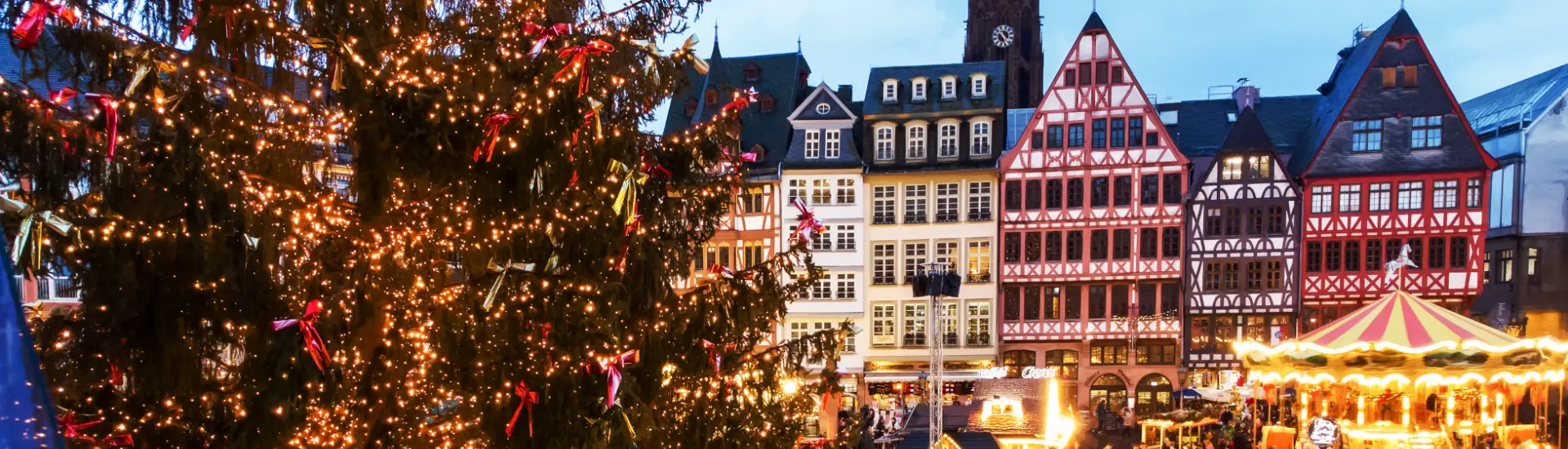
This year, you want to plan something special and take in as much of the gingery atmosphere as you can. And where might be better than a Christmas market? Lights, caroling, mulled wine and handmade gifts, they never disappoint. You are sure to kick off the season with your senses filled with festive magic.
The AXA team has once again put together a guide to the best Christmas markets in Europe in 2026, from iconic destinations like Strasbourg, Vienna and Prague to lesser-known Christmas markets offering a more authentic local experience.
Discover their 2026 dates, highlights, regional food and crafts, plus practical tips to plan your European Christmas market trip.
Written by: S.Castlemilk
Date: 12.11.2026
⚡️ Best European Christmas Markets 2026: Key takeaways ⚡️
Discover Europe’s best Christmas markets, from iconic destinations to smaller local favourites. Here’s where to enjoy festive traditions, regional treats and unique gifts in 2026.
- The iconic Christmas markets: Strasbourg, Vienna, Cologne, Budapest and Prague, five must-visit destinations for a classic festive experience.
- Local favourites worth exploring: Escape the biggest crowds with charming alternatives such as Obernai, Rattenberg, Esslingen, Szeged and Český Krumlov.
- Less-visited Christmas markets: Find festive surprises in Bergen, Tallinn, Craiova, Zagreb and Bolzano.
- Plan your Christmas market trip: Check the 2026 opening dates, travel by train, book accommodation early and prepare for local currencies and mug deposits.
- Essential travel checklist: Check visa requirements, hold valid travel insurance for peace of mind, and make sure your passport is up to date before hitting the road.
IN THIS MERRY ARTICLE YOU WILL FIND:
- 🎄 At a Glance: 10 Best European Christmas Markets - 2026 Dates
- 🎅 The 5 Must-Visit Iconic Christmas Markets in Europe
- 🌍 Authentic Local Alternatives to Europe’s Famous Markets
- 🌟 5 Underrated European Christmas Markets Off the Beaten Path
- 📝 6 Essential Tips to Plan Your European Christmas Market Trip
- 🛂 Visiting European Christmas Markets: Passport, Visa and Travel Insurance
- ❓ FAQ on European Christmas Markets
At a Glance: 10 Best European Christmas Markets - 2026 Dates
Worried about missing out on Europe’s Christmas magic? With so many festive markets to choose from, where should you start? Here’s an overview of the most famous European Christmas markets, their 2026 dates and main highlights.
| Market and Country | 2026 Dates | What Makes It Special |
|---|---|---|
|
Nov 27 – Dec 24 |
|
|
Nov 13 – Dec 26 |
|
|
Nov 16 – Dec 23 |
|
|
Nov 13 – Jan 1 |
|
|
Nov 28 – Jan 6 |
|
|
Nov 20 – Dec 22 |
|
|
Nov 20 – Jan 6 |
|
|
Nov 13 – Jan 3 |
|
|
Nov 28 – Jan 7 |
|
|
Nov 27 – Jan 6 |
|
5 Iconic Christmas Markets in Europe You Shouldn’t Miss
If you want to experience the full blast of Winter Wonderland magic, start with one of The Big Five. They go all in during the festive season, making sure you go home smelling of ginger and mulled wine, with your eyes filled with magic. The Big Five Christmas markets in Europe are:
1. Strasbourg, France
2. Vienna, Austria
3. Cologne, Germany
4. Budapest, Hungary
5. Prague, Czech Republic
🎄 1. Strasbourg Christmas Market (France): What Makes the Capital of Christmas So Special
With its centuries-old traditions, hundreds of wooden chalets, dazzling lights and eight festive markets, Strasbourg truly lives up to its title of Capital of Christmas.
- 2026 DATES: November 27 – December 24, 2026
- LOCATION: Place Kléber, Place de la Cathédrale, Place Grimmeissen
- WHY VISIT :
- France’s oldest market (1570)
- 300+ chalets, majestic lights, local craftsmanship
- Strasbourg unites tradition with sustainability and solidarity.
- No less than 8 markets to celebrate the end of the year festivities and satisfy all cravings!
- France’s oldest market (1570)
- MUST-TRY FOOD & DRINK:
- Bredle, different shaped and sized biscuits (over a 100!), cinnamon, spices, fruits etc.
- Grumbeerekiechle (potato fritters),
- Christstollen (a fruit loaded bread),
- Mulled wine (warm red wine with orange slices, cinnamon, cloves),
- The Starred Soup: Every year, regional Michelin-starred chefs create four exclusive soup recipes for the occasion. All proceeds go to the Humanis organisation.
- Bredle, different shaped and sized biscuits (over a 100!), cinnamon, spices, fruits etc.
- WHAT TO BUY:
- Meisenthal hand-blown glass ornaments, wooden crafts,
- Vintage furniture, clothes accessories as well as second-hand books and toys at the Marché Off, place Grimmeissen.
- Meisenthal hand-blown glass ornaments, wooden crafts,
- DON’T MISS:
- The Solidarity Christmas tree: Children in vulnerable situations hang their Christmas wishes on the tree. Visitors can pick a wish and bring the requested gift to the collection point.
- Salle de l’Aubette, place Kléber: Noël de la Brocante (November 26 – December 7), a great place to hunt for antiques and unique gifts, or OZ (December 11 – 22), a fine arts and crafts event where you can shop for Christmas decorations, jewellery and tableware, and take part in creative workshops.
- The Solidarity Christmas tree: Children in vulnerable situations hang their Christmas wishes on the tree. Visitors can pick a wish and bring the requested gift to the collection point.
💡 DID YOU KNOW? Even in 2020, when the Covid pandemic brought the world to a standstill, Strasbourg kept its Christmas tradition alive: its 30-metre tree still stood proudly on Place Kléber, shining as a beacon of light and hope for better days.
📌OFFICIAL TOURISM WEBSITES: Visit Strasbourg and Strasbourg Christmas Capital
🎄 2. Vienna Christmas Market at Rathausplatz: Ice Skating, Lights and Festive Traditions
With its fairytale City Hall, sparkling ice rinks and romantic festive decorations, Vienna’s Christmas market is a true winter wonderland.
- 2026 DATES: November 13 – December 26, 2026
- LOCATION: Rathausplatz (City Hall Square)
- OFFICIAL NAME: The Wiener Christkindlmarkt aka the Viennese Dream Christmas Market
- WHY VISIT:
- The setting in front of the majestic Gothic Revival city hall,
- The outdoor ice rinks connected by winding ice-skating paths through the park (the Vienna Ice World),
- The 200 red lights of the Tree of Hearts (Herzerlbaum),
- The glowing and floating Heart every 30 minutes.
- The 140+ wooden chalets,
- The vintage double decker carousel.
- The setting in front of the majestic Gothic Revival city hall,
- MUST-TRY FOOD & DRINK:
- Kaiserschmarrn, shredded pancake served with powdered sugar and applesauce
- Schaumbecher, marshmallow dipped in chocolate on a wafer cone.
- Käsespätzle, noodles topped with melted cheese
- Maroni (roasted chestnuts),
- Weihnachtspunsch or Christmas punch
- Suppe in Brot (soup served in bread!)
- Kaiserschmarrn, shredded pancake served with powdered sugar and applesauce
- WHAT TO BUY:
- Snow globes (Schneekugel, invented in Vienna in 1900),
- Hand-painted glass baubles,
- Wooden figurines (Krippenfiguren).
- Snow globes (Schneekugel, invented in Vienna in 1900),
- DON’T MISS:
- At the City Hall (ground floor) -Free Admission: Children can take part in candle-making and Christmas cookie workshops, while international choirs perform Christmas carols every Friday, Saturday and Sunday.
- Christmas performances: Catch a performance of Hänsel und Gretel or book tickets for Christmas in Vienna (December 16–17) at the Wiener Konzerthaus (Vienna Concert Hall). This world-famous concert brings together classical Christmas carols and popular international festive music.
- At the City Hall (ground floor) -Free Admission: Children can take part in candle-making and Christmas cookie workshops, while international choirs perform Christmas carols every Friday, Saturday and Sunday.
💡 DID YOU KNOW? Vienna is home to the original snow globe manufacturer, Original Wiener Schneekugel, which still makes these iconic souvenirs today.
✨INSIDER TIP: With over 20 Christmas markets across Vienna, make time for the charming Spittelberg Christmas market, tucked away along the neighbourhood's cosy streets.
📌 OFFICIAL TOURISM WEBSITE: Vienna Tourist Board
🎄 3. Cologne Cathedral Christmas Market: The Market of Hearts (Germany)
Cologne’s main market is also called the Market of Hearts (Markt der Herzen), reflecting both its heart-shaped decorations and its charitable work supporting local organisations.
- DATES: November 16 to December 23, 2026
⚠️ Important! The market will be closed on Sunday, November 22, for Totensonntag (Remembrance Sunday), a statutory day of remembrance in North Rhine-Westphalia when public entertainment is restricted by law.
- LOCATION: Around the 13th-century cathedral, a UNESCO World Heritage Site.
- WHY VISIT:
- The majestic setting including the marquee of sparkling stars stretched across Roncalliplatz.
- + 140 stalls honouring local craftsmanship and German gastronomy.
- 100 free events, including performances by the Cathedral choir and traditional Kasperle (Punch and Judy).
- WHAT TO EAT?
- Glühwein (different flavoured mulled wine),
- Lebkuchen (gingerbread),
- Brätwurst sausage,
- Reibekuchen (potato pancakes)
- SOUVENIRS TO BRING BACK:
- Handmade Christmas decorations, such as nutcrackers, wooden figurines and blown-glass ornaments.
- Collectible Christmas mugs: Drinks are served in deposit mugs that you can keep as souvenirs.
- The famous Eau de Cologne, available at the historic Farina Fragrance Museum
📌OFFICIAL TOURISM WEBSITES: Cologne Tourism board and Cologne Cathedral Christmas market
🎄 4. Budapest Advent Bazilika (Hungary): Best for 3D light shows and Local Craftsmanship
The Advent Bazilika Christmas Fair has been voted Europe’s most beautiful Christmas market five times.
- 2026 DATES: November 13, 2026 – January 1, 2027
- LOCATION: St. Stephen’s Square (Szent István tér)
- DON’T MISS:
- 3D light shows: Projected onto the magnificent façade of St. Stephen’s Basilica every 30 minutes from 5:30 pm. Don’t forget your 3D glasses!
- Live concerts: Including choir performances inside the Basilica.
- Ice skating: Glide around the 12-metre Christmas tree.
- Hungarikum: Over 100 wooden stalls showcasing traditional Hungarian crafts and local food specialities.
- 3D light shows: Projected onto the magnificent façade of St. Stephen’s Basilica every 30 minutes from 5:30 pm. Don’t forget your 3D glasses!
- MUST-TRY FOOD:
- Paprikás Csirke (chicken paprikash),
- Lángos (fried flat bread),
- Kürtőskalács (Chimney Cake)
- Paprikás Csirke (chicken paprikash),
- WHAT TO BUY: Handmade creations by local designers, including ceramic objects, wooden toys and chessboards, puppets, and felt accessories such as hats and bags.
💡 DID YOU KNOW? Just 600 metres away, the historic Vörösmarty Square Christmas Market is also worth a visit.
✨INSIDER TIP: Make time for Tchaikovsky’s The Nutcracker, a Hungarian Christmas tradition. Choose between the puppet show and the classic ballet at the Hungarian State Opera
📌FOR MORE INFORMATION : Budapest Info and Budapest Christmas markets
🎄 5. Prague Old Town Square Market (Czechia) – A Gothic Winter Wonderland
Set against Prague’s stunning Gothic architecture, the Old Town Square market combines traditional Czech crafts, festive food and live performances, with a Christmas tree chosen through a nationwide competition.
- WHEN? November 28 to January 6, 2027
- WHERE: Old town square
- WHAT MAKES IT SPECIAL:
- Held amidst the incredible architecture of the historic city centre.
- Dozens of stalls honouring local arts and crafts,
- Live stage performances: concerts, choirs, folk music and majorettes!
- Double pleasure with the Wenceslas Square Christmas market a 5-minute walk away.
- Held amidst the incredible architecture of the historic city centre.
- WHAT TO TAKE HOME: Traditional wooden toys, straw, glass and beaded ornaments, and delicate lace table linens.
- WHAT TO EAT:
- Roasted ham (Pražská šunka), grilled sausages (klobása) and fish, carp fries (kapří hranolky), the traditional local Christmas soup (rybí polévka),
- Sweet dumplings, marzipan and gingerbread in all shapes and sizes.
- Don’t forget to try a cup of hot apple cider or juice (jablíčko) as well as honey wine (medovina).
- Roasted ham (Pražská šunka), grilled sausages (klobása) and fish, carp fries (kapří hranolky), the traditional local Christmas soup (rybí polévka),
💡 FUN FACT: Around 1,500 kg of ingredients go into Prague’s traditional Christmas soup (rybí polévka), prepared in giant cauldrons and served to thousands of visitors.
📌FOR MORE INFORMATION: Official Prague Tourism Site
Authentic Local Alternatives to Europe’s Most Famous Christmas Markets
Love the festive atmosphere but not the crowds? Smaller towns offer a charming alternative to Europe’s best-known Christmas markets. Choosing a local market in the same country or region can mean:
- Fewer tourist crowds and tour buses
- Shorter queues at food stalls and attractions
- Local charm and beautiful regional architecture
- A more authentic atmosphere shared with local residents
- Better value on accommodation and dining
| Famous Christmas Market | Local Alternative | Why Visit? |
|---|---|---|
| Strasbourg (France) |
Obernai (≈ 30km from Strasbourg) |
|
| Vienna (Austria) |
Rattenberg (Tyrol, ≈ 400 km from Vienna) |
|
| Cologne (Germany) |
Esslingen ≈ 350km from Cologne, |
|
| Budapest (Hungary) |
Nov 27 – Dec 24 (≈ 170km from Budapest) |
|
| Prague (Czechia) |
Nov 20 – Jan 3, 2027 (≈ 170 km from Prague) |
|
5 Underrated Christmas Markets in Europe Worth Discovering
These up-and-coming Christmas markets should also feature on your bucket list. Dramatic settings, UNESCO-listed sites, historic landmarks and other festive wonders await visitors.
- Bergen, Norway
- Tallinn, Estonia
- Craiova, Romania
- Zagreb, Croatia
- Bolzano, Italy
🎁 1. Bergen Christmas market, Norway: Fjord-side Magic and Nordic Charm
Set against a spectacular mountain backdrop, Bergen's Christmas market (Julemarked) fills Festplassen square with around 90 wooden cabins, festive lights, local crafts and Norwegian treats.
- WHEN? November 20 to December 22, 2026
- DON’T’MISS: Visit Pepperkakebyen, the world’s largest gingerbread village, featuring miniature houses, castles, churches and even oil platforms, followed by a gingerbread heart tasting. Enjoy panoramic city views from the Ferris wheel, warm up with Norwegian mulled wine (gløgg) in the heated Varmestuen, and browse traditional nisser figurines at Julehuset, Bergen’s year-round Christmas shop.
✨SPECIAL EVENT - November 14, 2026: the Festival of Lights (Lysfesten) at Festplassen, with Christmas tree lighting and fireworks.
🎁 2. Tallinn Christmas Market (Estonia): Guaranteed Snowy Romance
Set on the Town Hall Square of the charming medieval old town, the illuminated stalls of Tallinn’s Christmas market welcome local products and handicraft around a huge Christmas tree. Snow is often the special guest star adding a touch of magic to the festive atmosphere.
- WHEN? Nov 20 to Jan 6
- WHY IT’S FUN: A carousel, a cosy Santa house to meet Jõuluvana, folk music groups, dance troupes and performers, traditional Christmas huts with seasonal and local specialities.
- FOR FOODIES: Sauerkraut, different meat roasts, cinnamon and cardamom buns, handmade truffles, different varieties of glögg (cranberry-cherry, Setomaa raspberry-blackcurrant, pumpkin).
🎁 3. Craiova Christmas Market (Romania): Fairy-Tale Magic on a Budget
Spreading over 280,000 square meters and 6 town squares, Craiova’s Târgul de Crăciun (Christmas market), is Europe's largest Christmas event and is in strong position to become the most beautiful Christmas market as well! The town goes all out every year to amaze visitors and launch the festive season full blast.
- DATES: November 13 to January 3, 2026.
- WHY IT’S MAGIC: Walk under glowing Christmas tree arches, watch Santa fly right over your head in his sleigh (yes, really!), and catch live shows before hitting the ice rink or riding the wheel for epic views. In between workshops, wander past giant holiday figures and grab local bites from Oltenia and handmade gifts from colorful wooden chalets.
- LOCAL FLAVOURS & CRAFTS: Enjoy sarmale (stuffed cabbage rolls), plum brandy and honey gingerbread (Turtă Dulce), and pick up handmade pottery or hand-woven rugs as souvenirs (if you have room in your luggage!).
✨SPECIAL EVENT: In 2026, experience Tărâmul Elfilor (The Land of the Elves), a magical live performance where elves take centre stage!
🎁 4. Zagreb Advent (Croatia): Award-Winning Magic That Lasts into January
Advent Zagreb brings together several Christmas markets within walking distance of one another, combining festive entertainment with visits to the city's cultural landmarks.
- WHEN? November 28, 2026 – January 7, 2027
- BEST ITINERARY: Start at Ban Jelačić Square, then visit European Square and Zrinjevac Park before continuing to King Tomislav Square and the Art Pavilion.
- WHAT TO ENJOY: Illuminated streets and trees, outdoor shows on Ban Jelačić Square, concerts and choirs in Zrinjevac Park, and the giant ice rink at Ledeni Park, in front of the Art Pavilion.
- WHAT TO EAT: Smoked pork (buncek), grilled sausages (kobasice) and fritule doughnuts.
✨ EXTRA EXPERIENCES: Ride the Zagreb Funicular, one of the world's shortest, to the festive Upper Town, then explore Grič Tunnel, a former WWII shelter hosting Advent events with holographic projections and sound-and-light displays.
🎁 5. Bolzano Christmas Market (Italy): Alpine-Mediterranean Charm
At the foot of the majestic Dolomite mountain range, Austrian, German and Italian traditions delightfully blend together to create a magical Christmas wonderland at Bolzano’s market, the largest in Italy.
- DATES: Nov 27 to Jan 6
- WHY IT’S SPECIAL: Set against the Cattedrale di Santa Maria Assunta, the Mercatino di Natale boasts a magical mountain-and-vineyard backdrop, with over 100 decorated wooden chalets showcasing local crafts and delicacies. Traditional music concerts, including performances inside the Cathedral, add to the festive atmosphere.
- LOCAL FLAVOURS & SOUVENIRS: Enjoy Krapfen (jam-filled pastries), Spitzbuben (jam shortbread) and Glühwein (mulled wine with orange and cloves). Sample local mountain cheeses and wines, then browse wooden carvings, slippers and wellness products made with local pine and wild herbs.
- DON’T MISS!
Meet Ötzi the Iceman: Solve history’s ultimate cold case at the South Tyrol Museum of Archaeology. Discovered in the Ötztal Alps in 1991, this 5,300-year-old mummy is believed to be the victim of an ancient, unsolved murder.
✨SPECIAL EVENT: Krampus and St. Nicholas Festivities. If you visit on December 6, don't miss the thrilling local traditions as St. Nicholas and the terrifying, devil-like Krampus take over the streets.
6 Essential Tips to Plan Your European Christmas Market Trip
Here are a few recommendations to help you make the most of your stay by planning wisely:
- Timing and crowd management: For easy browsing and shorter lines, favour weekday visits between 10:00 AM and 3:00 PM. Return after dark to enjoy the lights, scents, music and festive atmosphere.
Avoid Friday and Saturday evenings when local crowds peak.
- Train Hopping Between Markets: Make the most of European high-speed train lines (ICE, TGV, ÖBB) and optimize your itinerary between different iconic locations which can be connected during a single trip (such as Paris → Strasbourg, Vienna → Budapest
or Prague → Olomouc).
- Plan ahead! Book your accommodation 4 to 6 months in advance for high-demand destinations like Strasbourg, Cologne, and Vienna. The range of cost/quality options will be wider, and you’ll avoid disappointment or extra spending.
- Widen your horizon: Don’t focus on the city centres as prices soar during the festive season. Look into cheaper nearby towns with good public transport connections.
For example, Saverne or Offenburg (≈ 30 min by train from Strasbourg), Korneuburg or Klosterneuburg (≈ 20 min from Vienna). They also hold their own little festivities to enjoy.
- Cash & The Pfand (Mug Deposit) System: While credit card payments are usually accepted on market stands in Eastern Europe, you might find some exhibitors still favour cash settlements.
Glühmwein (mulled wine) and other beverages are often served in mugs which require a 3€-5€ deposit. The upside is that you can choose to keep the cup as a souvenir.
- Multi-Currency Planning: While most market destinations use the Euro (€), remember to carry local cash or fee-free card options when traveling to Czechia (Czech Koruna - CZK), Hungary (Hungarian Forint - HUF), or Romania (Romanian Leu - RON).
Visiting European Christmas Markets: Passport, Visa and Travel Insurance
Don’t let an administrative setback ruin your plans! Make sure you have the proper documentation to be allowed to hop on that sleigh and discover Christmas magic, European style.Navigating entry rules for Europe’s Schengen Area depends entirely on your citizenship. Here is what you need to know before booking your holiday trip:
ENTRY REQUIREMENTS BY TRAVELER NATIONALITY AND STATUS
- FOR EU AND SCHENGEN CITIZENS & RESIDENTS: No visa required. You only need a valid national ID card or passport to travel freely across Schengen borders.
- FOR VISA-EXEMPT FOREIGN NATIONALITIES: No short-stay visa required for stays under 90 days within a 180-day period.
Your passport must be valid for at least 3 months beyond your planned departure date from the Schengen Area.
- FOR NATIONALITIES REQUIRING A SCHENGEN VISA:
- A short-stay Schengen Visa (Type C) is mandatory to be allowed in the Schengen area.
- Applications must be submitted through the embassy or consulate of your primary destination, usually 15 to 60 days before departure.
📌GOOD TO KNOW! A Schengen visa allows you to enjoy the Grand Tour of all the Christmas markets held in Schengen member states.
One visa = more than 5,000 Christmas markets. You can do it!
TRAVEL MEDICAL INSURANCE REQUIREMENTS
- Mandatory Travel Insurance for Schengen Visa Applicants: If you require a Schengen Visa, presenting an official travel medical insurance certificate is a strict legal requirement for your visa approval.
The policy must provide a minimum medical coverage of €30,000, including emergency hospital treatment, urgent medical care, and repatriation to your home country.
- Recommended Travel Insurance for all other visitors: Even if you do not need a visa, standard domestic health insurance policies or credit card coverages rarely pay for overseas medical evacuations, winter sports accidents, or any mishaps which can occur during a stay abroad. Dedicated international protection guarantees total peace of mind.
🎁Good News! AXA Schengen Travel Insurance Has You Covered!
Whether you need a mandatory embassy-approved certificate for your visa application or comprehensive protection for a winter getaway in Europe,
AXA Schengen Insurance provides instant online coverage starting at low rates.
Certificates are generated immediately, guaranteed to meet all official Schengen embassy requirements, and fully refundable if your visa is denied. And that’s just the certificate!
AXA insurance protects you and your loved ones in case of all sorts of trouble: health issues, medical repatriation, luggage nuisances, theft or loss of ID documents and much more!
GET YOUR FREE ONLINE QUOTE
You might find these articles interesting:
- Christmas Traditions in Europe
- Best Free Events to Celebrate New Year’s Eve in Europe
- Travel Guide to Italy
- Travel Guide to France
- Travel Guide to Croatia
- Travel Guide to Germany
FAQ Christmas Markets in Europe
Is there a Harry Potter Christmas market in Munich in 2026?
Yes! Munich is hosting a Harry Potter-themed Christmas market on Praterinsel from November 28 to December 6, 2026. Organised as a magical experience for fans, it will feature themed photo spots, around ten stalls, special food and surprises inspired by the wizarding world. The event is linked to the launch of HBO's new Harry Potter series.
What is the best Christmas market in Europe for first timers?
Strasbourg (France) and Vienna (Austria) are the top choices for first-time visitors, thanks to their international airport hubs and direct high-speed train connections. Strasbourg offers historic half-timbered streets and France's oldest market traditions—and the fairytale town of Colmar is just a 30-minute train ride away. Meanwhile, Vienna delivers an imperial backdrop, open-air classical concerts, and world-class ice-skating trails, easily paired with nearby Salzburg by train.
Which European Christmas markets stay open after Christmas Day?
While most markets in France and Germany close on December 23 or 24, several major destinations across Central and Eastern Europe stay open through early January. Highlights include Prague (Czechia), Budapest (Hungary), Zagreb (Croatia), Craiova (Romania), Tallinn (Estonia) and Bolzano (Italy), where celebrations extend past New Year's Day through January 6–7.
How to get around European Christmas markets without a car?
Europe’s interconnected high-speed rail network makes market-hopping simple without a car. For instance, high-speed trains seamlessly connect Frankfurt to Nuremberg in under two hours, or Vienna to Budapest in under three hours, letting you travel center-to-center without winter driving stress.
Do I need cash for Christmas markets in Europe?
Yes. While digital and contactless card payments are common in countries like Poland or Estonia, traditional stalls in Germany, Austria, and France still prefer cash for small purchases like food, crafts, and mulled wine. Always carry small Euro (or local currency) notes and coins, especially for mug deposits (Pfand).
Are Christmas markets in Europe free to enter?
Yes, virtually all traditional European Christmas markets are free to enter. You only pay for what you eat, drink, or buy at the wooden stalls. The only rare exceptions are specific enclosed events, indoor concerts, or historical ice-skating rinks that may charge a small admission fee.
What budget should I plan for a European Christmas market trip?
Excluding accommodation, budget around €30–€50 per person per day specifically for market food, drinks, and small artisan souvenirs. Glühwein or hot chocolate typically costs €4–€6 (plus a refundable €3–€5 mug deposit), while regional hot meals like sausages, crepes, or goulash cost €6–€12 per portion.
AXA already looks after millions of people around the world
With our travel insurance we can take great care of you too
AXA Schengen's Travel Insurances

AXA Schengen Basic
AXA Schengen Basic is perfect to obtain your Schengen visa. This travel insurance meets all the requirements demanded, covers you in all the countries of the Schengen Area as well as 4 European microstates (Andorra, Vatican City, Monaco and San Marino)
AXA Schengen Essential
AXA Essential is perfect to obtain your Schengen visa. It provides coverage in all the Schengen countries + the European microstates + all the EU countries (including UK, Cyprus and the Republic of Ireland). And you get additional guarantees compared to AXA Schengen Basic.

AXA Schengen Annual
AXA Annual is perfect to obtain your Schengen visa. This annual travel insurance is ideal for those who often travel to Europe as well as multiple-entry Schengen visa holders. You get the same guarantees as AXA Schengen Annual for different countries during 90 days.